
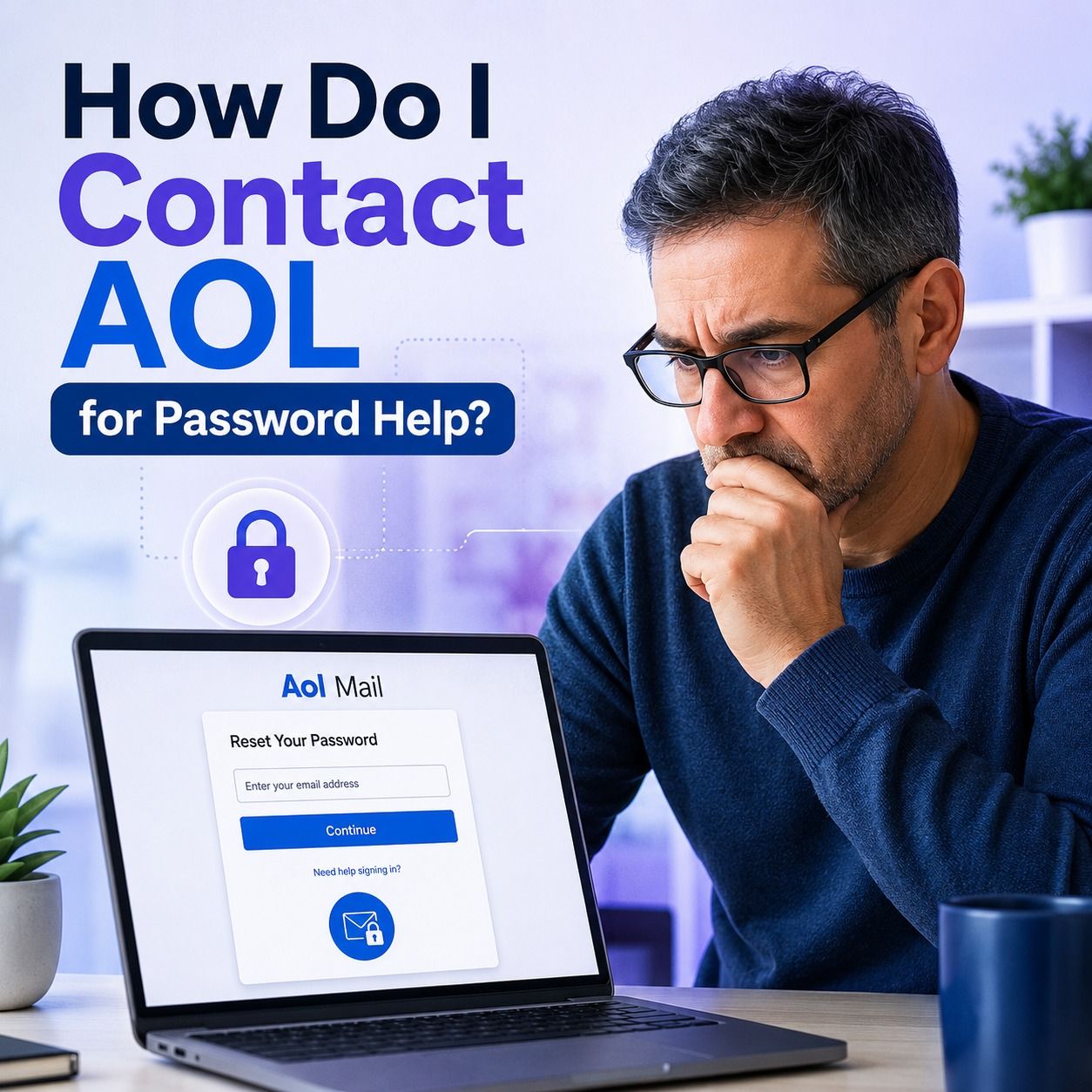
Forgetting your AOL password can be frustrating, especially when you need immediate access to your emails. If you're asking, "How do I contact AOL for password help?", you're not alone. Many AOL users experience password-related issues due to forgotten credentials, account security updates, or login errors.
Fortunately, AOL offers several ways to recover your account and reset your password safely. This guide explains how to troubleshoot password problems, recover your account, and keep it secure in the future.
Why Can't I Sign In to My AOL Account?
There are several reasons why you may be unable to access your AOL account.
Common Causes
- Forgotten password
- Incorrect email address
- Caps Lock enabled while typing
- Browser cache issues
- Outdated AOL Mail app
- Two-step verification problems
- Suspicious login activity
- Temporary AOL server issues
- Weak internet connection
Identifying the exact reason makes it easier to solve the problem.
How to Reset Your AOL Password
If you've forgotten your password, follow these steps.
Step 1: Visit the AOL Sign-In Page
Open the AOL sign-in page and select Forgot Password?
Step 2: Verify Your Identity
Enter your:
- AOL email address
- Recovery email
- Recovery phone number
AOL will verify your identity before allowing a password reset.
Step 3: Receive a Verification Code
A verification code will be sent to your recovery email or mobile number.
Enter the code on the verification page.
Step 4: Create a New Password
Choose a password that:
- Contains at least 12 characters
- Uses uppercase and lowercase letters
- Includes numbers
- Includes special symbols
Avoid using birthdays, names, or common words.
What If You Don't Receive the Verification Code?
Sometimes the verification code may not arrive immediately.
Try These Solutions
Check Your Spam Folder
If using a recovery email, look inside your Spam or Junk folder.
Confirm Your Phone Number
Make sure your recovery phone number is active and able to receive text messages.
Wait a Few Minutes
Network delays can sometimes delay verification messages.
Request a New Code
If the first code expires, request another one.
How to Fix AOL Password Problems
If resetting the password doesn't solve the issue, try these troubleshooting tips.
Clear Browser Cache
Old browser data can interfere with AOL login.
- Clear cookies.
- Clear cache.
- Restart your browser.
- Sign in again.
Try Another Browser
If AOL doesn't open correctly:
- Google Chrome
- Microsoft Edge
- Mozilla Firefox
- Safari
Testing another browser often solves login issues.
Update the AOL App
If you're using the AOL mobile app:
- Open the App Store or Google Play Store.
- Search for AOL Mail.
- Install the latest update.
Older app versions may have login bugs.
Check Your Internet Connection
A poor internet connection may prevent authentication.
Try:
- Restarting your router.
- Switching Wi-Fi networks.
- Using mobile data.
- Restarting your device.
How to Keep Your AOL Account Secure
Once you've regained access, take steps to protect your account.
Enable Two-Step Verification
This adds an extra layer of protection by requiring a verification code during sign-in.
Use a Strong Password
A secure password should include:
- Uppercase letters
- Lowercase letters
- Numbers
- Symbols
Never reuse passwords across multiple accounts.
Update Recovery Information
Keep your recovery phone number and recovery email address up to date.
This makes future account recovery much easier.
Avoid Phishing Emails
Never enter your AOL password through suspicious links or emails.
Always sign in using the official AOL website or app.
Common AOL Password Errors
You may encounter messages such as:
Incorrect Password
Double-check spelling and ensure Caps Lock is turned off.
Account Locked
Too many unsuccessful login attempts can temporarily lock your account.
Wait a while before trying again or reset your password.
Verification Failed
Ensure your recovery information is correct.
When Should You Seek Additional Help?
If you're still unable to access your AOL account after trying the steps above, additional assistance may be needed, especially if:
- You no longer have access to your recovery email or phone number.
- Your account appears to have been compromised.
- You continue receiving password errors after a successful reset.
- You believe someone else has accessed your account.
Be prepared to verify your identity before account recovery assistance can be provided.
Tips to Avoid Future Password Problems
Follow these best practices:
- Use a password manager.
- Change your password regularly.
- Enable two-step verification.
- Keep recovery details updated.
- Avoid logging in on public computers.
- Sign out after using shared devices.
- Keep your browser and apps updated.
Frequently Asked Questions (FAQ)
How do I contact AOL for password help?
If you're unable to reset your password using the self-service recovery process, visit the official AOL Help resources and use the available account recovery options.
Can I recover my AOL account without my phone number?
Yes. If you have a recovery email address linked to your account, you may be able to verify your identity through that method.
Why won't AOL accept my password?
Your password may be incorrect, expired, or your account may be temporarily locked due to multiple unsuccessful login attempts.
How long does AOL keep an account locked?
Temporary security locks usually expire after a short period, but the duration can vary depending on the reason for the lock.
Can I change my AOL password anytime?
Yes. You can update your password whenever you want through your AOL account security settings.
Conclusion
If you've been asking, "How do I contact AOL for password help?", the first step is to use AOL's password recovery process. Most password issues can be resolved by verifying your identity, resetting your password, and checking your browser or app settings. To reduce the risk of future login problems, enable two-step verification, keep your recovery information current, and use a strong, unique password. With these simple steps, you can regain access to your AOL account and keep it protected.